
About children’s cancer
- Diagnosis
Information about childhood cancer, so you can make informed choices, and feel as supported as possible through this challenging journey.
Source: Cancer Australia
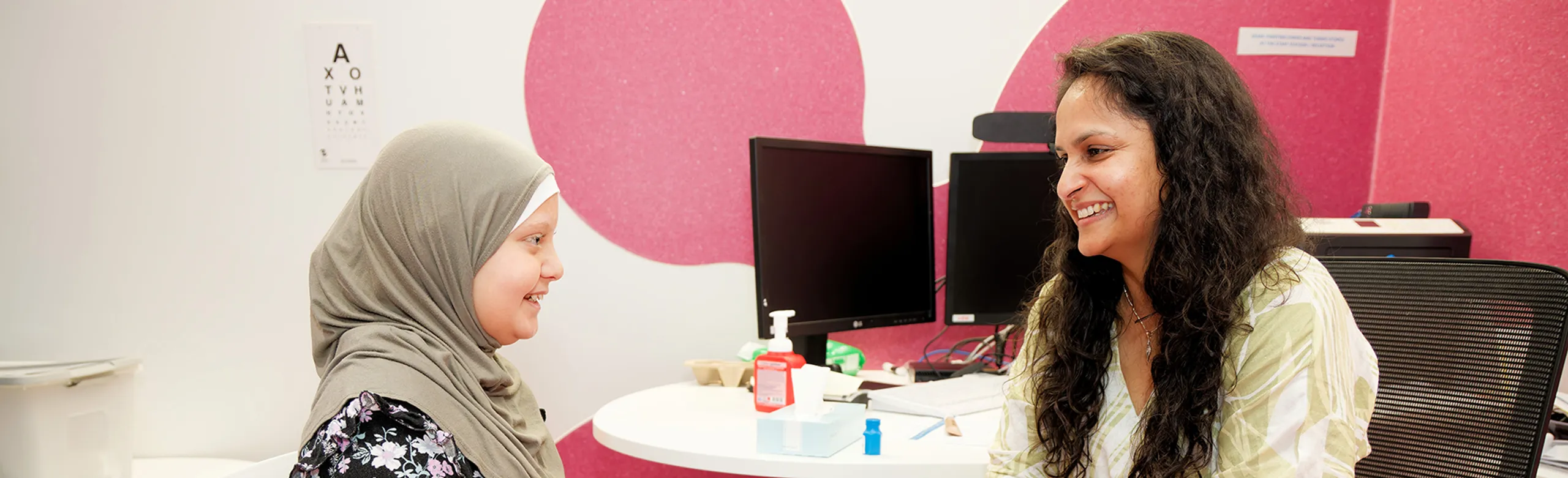
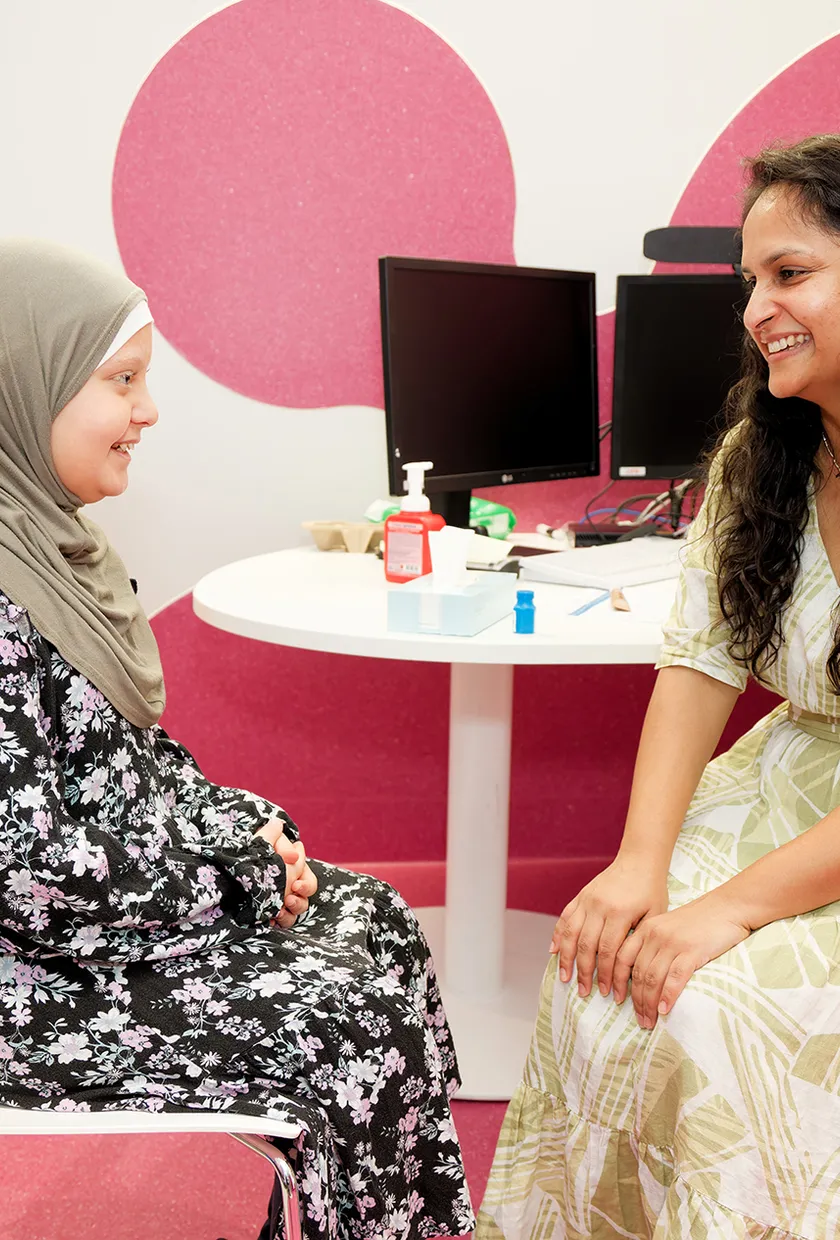
This page brings together resources and information to help patients, families and communities navigating a childhood cancer diagnosis.
For clinical information about your child's treatment, your care team at Perth Children's Hospital should be your first point of contact.
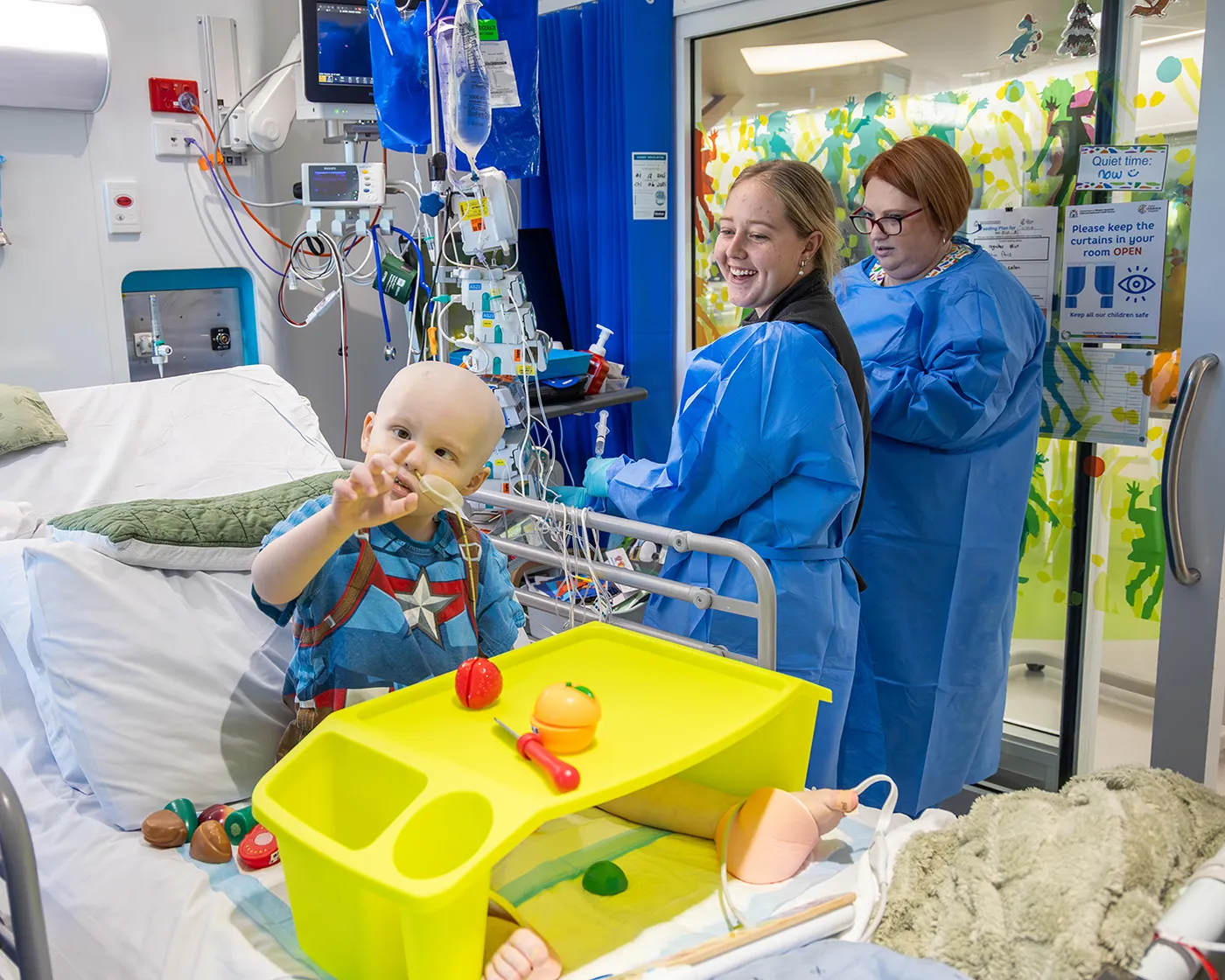
Patients who are undergoing oncology or haematology treatment at Perth Children's Hospital should visit the Perth Children's Hospital website for information relating to their treatment.
If you need immediate oncology or haematology advice, please call the 24-hour Hot Phone (Perth Children's Hospital Haematology / Oncology Triage Phone): 0410 717 816
Information about childhood cancer, so you can make informed choices, and feel as supported as possible through this challenging journey.
Source: Cancer Australia
General information and things to remember about your child with cancer.
Source: Perth Children’s Hospital
This booklet includes places to write down information you receive from hospital staff so that it can be easily remembered, common hospital terms and what they mean, important information to support you in your caring role, useful contacts for services and supports for both you and the person you care for.
Source: Carers WA
Helpful information, resources and practical tools to support families through childhood cancer. There are resources across diagnosis, treatment, survivorship, relapse, and bereavement.
Source: Redkite
A website full of resources, contributed to by parents who have already walked this road, to take some of the friction out of navigating your new life.
Source: Developed by Anna Stanford
A leaflet containing general tips from families who have faced these challenges.
Source: Victoria's Paediatric Integrated Cancer Service
A podcast with Dr Geoff to help understand childhood cancer.
Source: Dr Geoffey McCowage, Senior Paediatric Oncologist, Sydney, Australia - Spotify
Information for Aboriginal and Torres Strait Islander families navigating a childhood cancer diagnosis.
Source: Perth Children’s Hospital
Guidance on signs to look for and when to call the hospital for help.
Source: Perth Children’s Hospital
A video to help understand what it’s like to get a nasogastric, or NG, tube for children.
Source: The Royal Children’s Hospital Melbourne
A video to help understand how a port works and what it’s like to have a port accessed.
Source: The Royal Children’s Hospital Melbourne
A video to help understand chemotherapy for children.
Source: The Royal Children’s Hospital Melbourne
Important information for administering chemotherapy at home, including instructions and common questions.
Source: Perth Children’s Hospital
Important information for Aboriginal and Torres Strait Islander families administering chemotherapy at home, including instructions and common questions.
Source: Perth Children’s Hospital
Information to understand how to prevent infection in asplenia (without a spleen) or hyposplenia (non-functioning spleen), including risk of infection and immunisations.
Source: Perth Children’s Hospital
This self-management resource aims to help you to understand common impacts on sleep and strategies that can optimise your sleep.
Source: Peter MacCallum Cancer Centre Department of Psychology & ONTrac at Peter Mac Victorian Adolescent and Young Adult Cancer Service & The Victorian and Tasmanian Youth Cancer Action Board
Information on how to take care of implanted devices, including how it’s inserted, why it’s required, how medication is delivered, general care for the port and when to seek help.
Source: Perth Children’s Hospital
Information on how to take care of tunnelled central lines, including how it’s inserted, why it’s required, general care instructions and when to seek help.
Source: Perth Children’s Hospital
Safety recommendations to reduce the exposure to chemotherapy at home for your family and friends.
Source: Perth Children’s Hospital
Safety recommendations for Aboriginal and Torres Strait Islander families to reduce the exposure to chemotherapy at home for your family and friends.
Source: Perth Children’s Hospital
A step by step guide for de-needling a port.
Source: Perth Children’s Hospital
Information to understand Immune thrombocytopenia (ITP), including what what causes it, signs and symptoms, diagnosis, management and when to seek help.
Source: Perth Children’s Hospital
PCH’s Keeping Kids in No Distress (KKIND) service aims to help children cope with medical trauma, anxiety and distress caused by illness, injury or hospitalisation.
Source: Perth Children’s Hospital
Information on how to take care of bub’s mouth during chemotherapy
Source: Perth Children’s Hospital
A step by step guide for needling a port.
Source: Perth Children’s Hospital
Bub’s with cancer will often have less white cells in their blood this is called neutropenia (new-tro-pee-nee-ah). This resource gives information about how to keep bub healthy when they have neutropenia.
Source: Perth Children’s Hospital
A step by step guide for parents on Parenteral Nutrition (PN) Administration for their child.
Source: Perth Children’s Hospital
Information for parents on the radiologic insertion of a Venous Access Device, including how the device is inserted, who performs the procedure, and details of what happens on the day of the procedure.
Source: Perth Children’s Hospital
Useful tools for children and young adults undergoing medical or surgical procedures, and the parents and guardians supporting them, to manage stress and anxiety.
Source: EPIC – Effective Peri-Procedural Communication
Important information about administering Ondansetron.
Source: Perth Children’s Hospital
Clinical trials are an important part of developing new medical and other interventions that may improve the health and wellbeing of all Australians. Find out what a clinical trial is, why they’re important, and the different types and phases of clinical trials.
Source: Australian Clinical Trials
The ANZCHOG Children’s Cancer Clinical Trials Repository (ACCCTR) aims to provide a complete, up-to-date list of clinical trials conducted in children’s cancer centres in Australia and New Zealand.
Source: ANZCHOG
A database of clinical trials and their results from Australia, New Zealand, and other countries.
Source: Australian New Zealand Clinical Trials Registry
What clinical trials are, how families can access them, and what to expect.
Source: Cancer Australia
Hear from parents who participated in a precision medicine trial for high-risk childhood cancer to understand their experiences.
Source: Behavioural Sciences Unit at the Kids Cancer Centre, Sydney Children’s Hospitals Network – Randwick and UNSW Sydney
An animation developed by researchers to support families to better understand what might happen if a child takes part in childhood cancer precision medicine.
Source: Behavioural Sciences Unit at the Kids Cancer Centre, Sydney Children’s Hospitals Network – Randwick and UNSW Sydney
An animation developed by researchers to support families to better understand childhood cancer precision medicine.
Source: Behavioural Sciences Unit at the Kids Cancer Centre, Sydney Children’s Hospitals Network – Randwick and UNSW Sydney
This booklet has been prepared by Cancer Council to help you understand more about cancer research, particularly the research studies known as clinical trials. Cancer research has led to many advances in cancer care and continues to improve the lives of people affected by cancer.
Source: Cancer Council
The Delta team at the Behavioural Sciences Unit (UNSW Sydney) have developed a short animation to help explain to parents and young people what clinical trials are. The animation is targeted at 8-16-year-olds, but is useful for all ages.
Source: Behavioural Sciences Unit at the Kids Cancer Centre, Sydney Children’s Hospitals Network – Randwick and UNSW Sydney
If you've been treated for cancer, you might be worried that it has had an impact on your fertility. This is a guide to relationships, sex and fertility for young people after cancer.
Source: Canteen
After the rain showcases two stories of life after treatment for paediatric cancer.
Source: PICS
A webinar co-hosted in November 2021 by PICS and the Australian Cancer Survivorship Centre (ACSC), covering survivorship in the paediatric context: growth and puberty, fertility and reproductive health. transitioning from a paediatric to an adolescent and young adult (AYA) to an adult service and survivorship resources. Please note this is a Victorian resource.
Source: Victoria’s Paediatric Integrated Cancer Service
Health information on fertility and reproductive health for males after cancer treatment as a child or teenager.
Source: Victoria’s Paediatric Integrated Cancer Service
Information from Canteen to help navigate ongoing challenges after cancer treatment.
Source: Canteen
This book provides information that other young people, and health professionals at Canteen, have found useful during and after treatment. It’s mainly aimed at young people who have recently been diagnosed with cancer. It will also be useful for young people who have had cancer for some time or who are cancer survivors.
Source: Canteen
This booklet explains some of the challenges that children in preschool and prep might experience regarding their education and socialisation following treatment, and describes strategies for children, parents and teachers to help manage these.
Source: Victoria’s Paediatric Integrated Cancer Service
This booklet explains some of the challenges that children might experience regarding their education and socialisation following treatment, and describes strategies for children, parents and teachers to help manage these.
Source: Victoria’s Paediatric Integrated Cancer Service
This booklet explains some of the challenges adolescents might experience following treatment, and describes strategies to help parents and adolescents manage these.
Source: Victoria’s Paediatric Integrated Cancer Service
A supportive, empowering and safe space created by survivors and their families, for survivors of childhood cancer across Australia.
Source: Survivors of Childhood Cancer Australia
This video describes potential long-term endocrine (hormonal) effects following treatment for childhood cancer, risks, and management strategies.
Source: Victoria’s Paediatric Integrated Cancer Service
This video explains the reasons for holistic, long-term follow-up care after treatment for childhood cancer.
Source: Victoria’s Paediatric Integrated Cancer Service
This video describesfactors that pose risks for neurocognitive late effects following childhood cancer and common difficulties faced by survivors. Please note this is a Victorian resource.
Source: Victoria’s Paediatric Integrated Cancer Service
This video describes potential late complications that may follow radiotherapy treatment for childhood cancer.
Source: Victoria’s Paediatric Integrated Cancer Service
Certain drugs and radiotherapy (radiation) to the chest may affect the heart after treatment is finished. This is information for children and teenagers who had chemotherapy or radiation to the chest that may affect the heart.
Source: Victoria’s Paediatric Integrated Cancer Service
Information about the most common types of children’s cancers, including symptoms, risk factors, diagnosis, treatment, support.
Source: Cancer Australia