Our focus
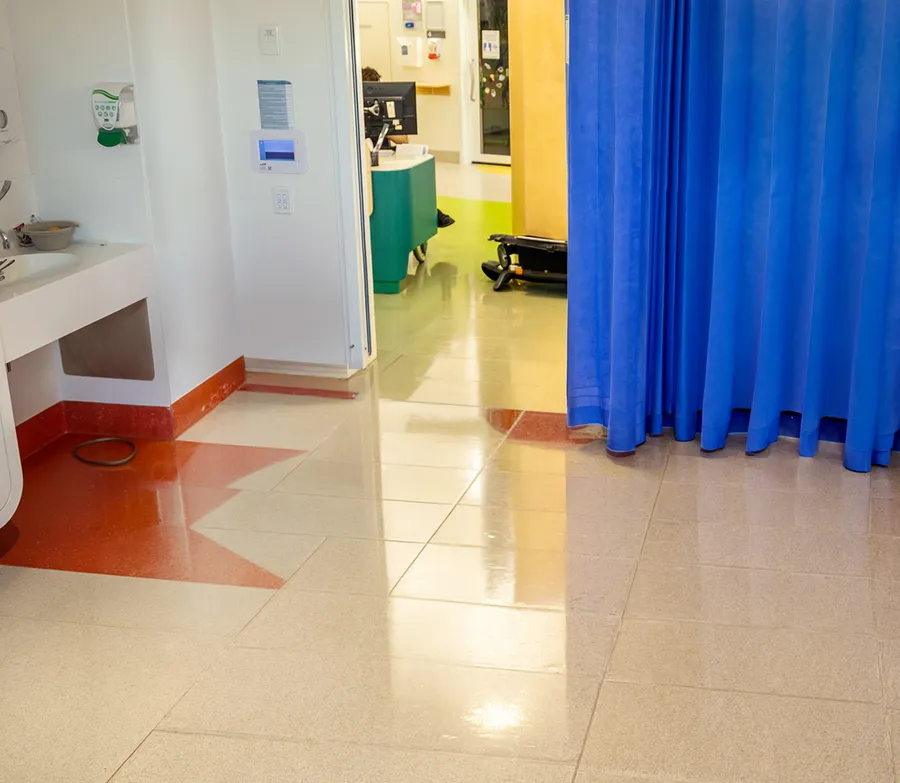
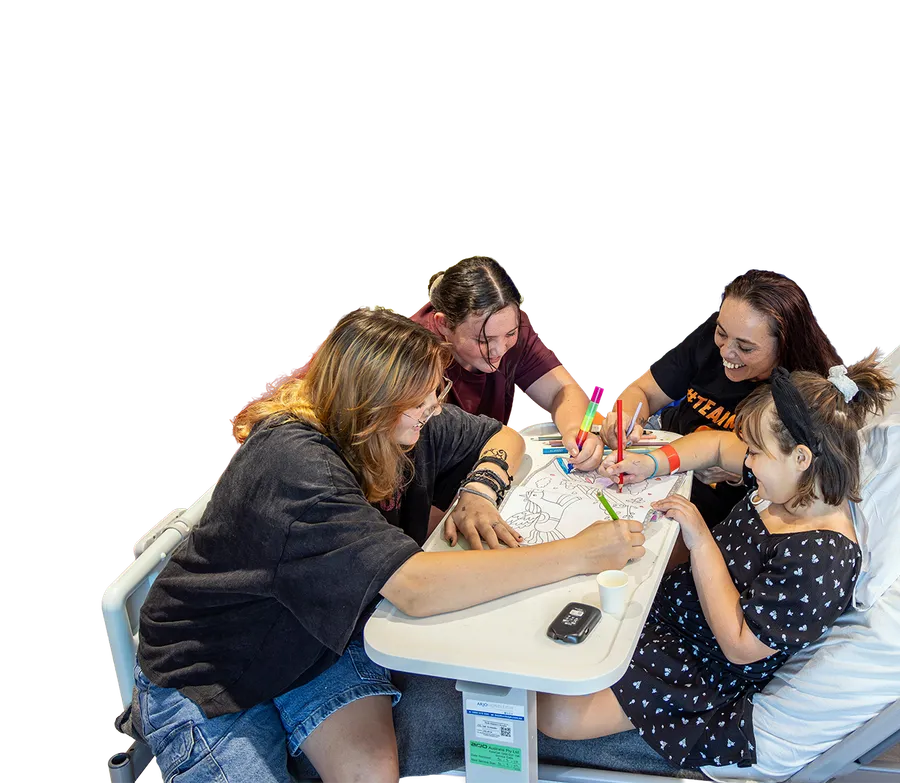
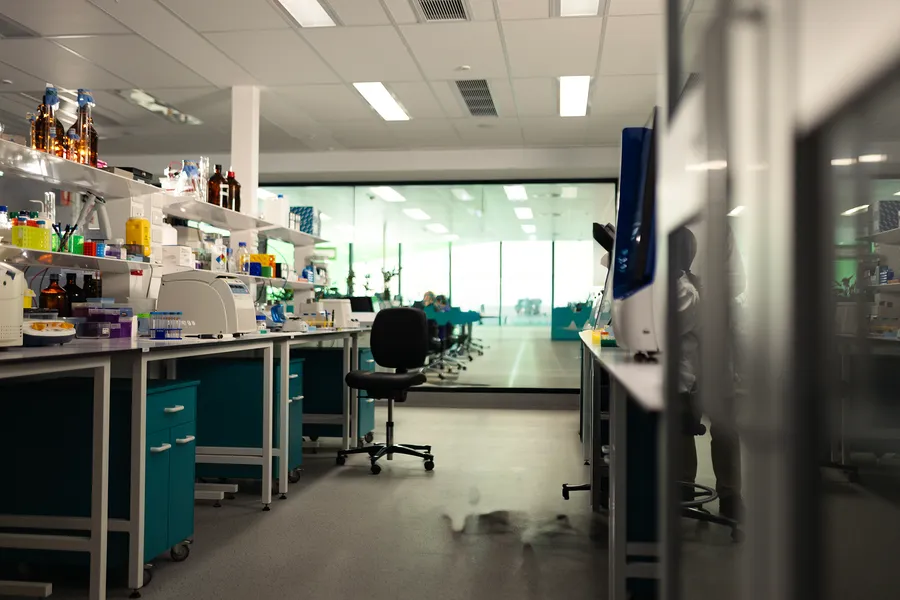
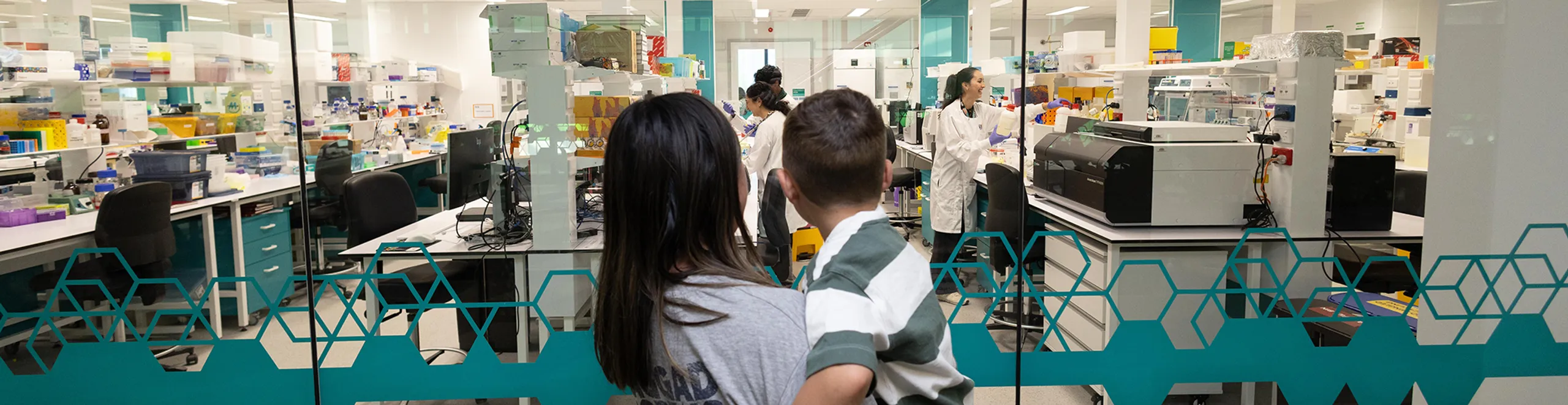
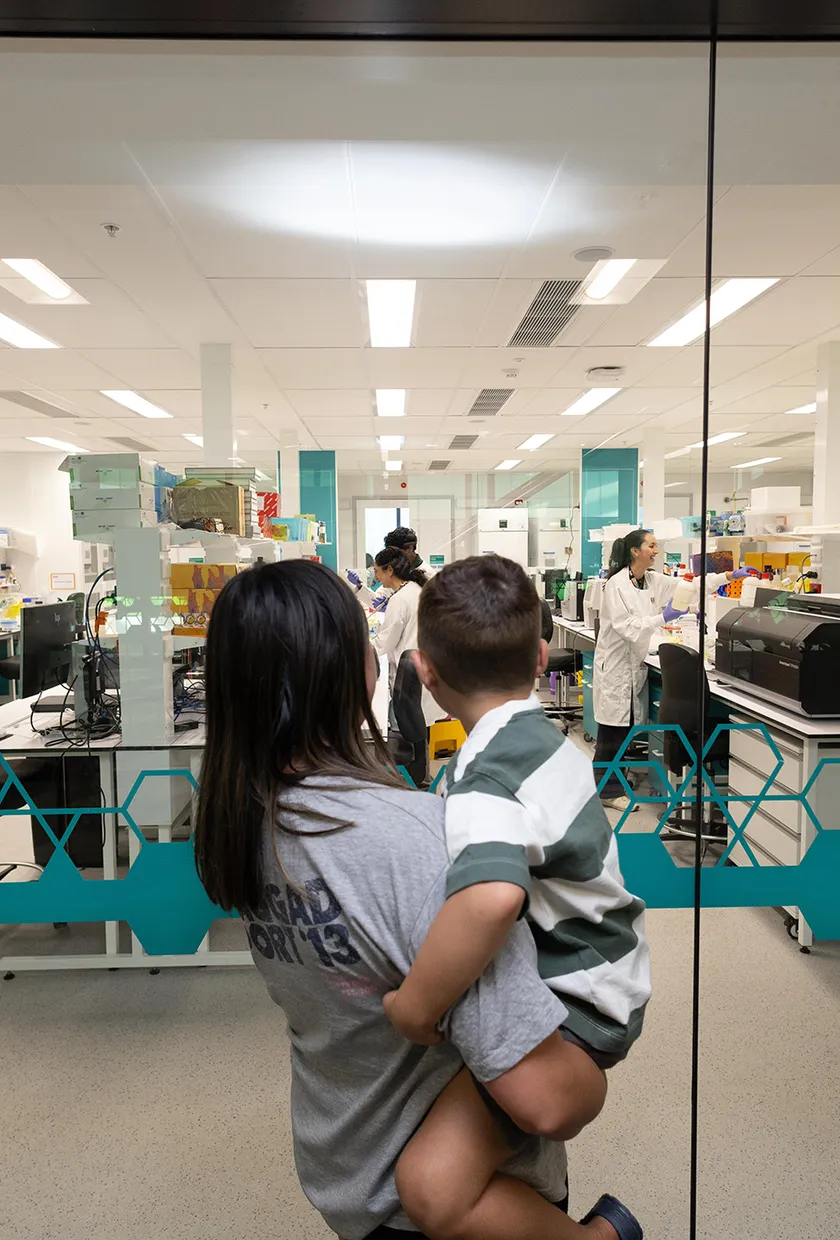
Through the Western Australian Comprehensive Kids Cancer Centre, research and clinical care form a continuous, collaborative cycle. Discoveries made in the lab flow directly into better care, while insights from children and families in the clinic guide the next wave of research. This ongoing loop allows us to constantly refine care, reduce harm and respond to the real‑world needs of children and their families.
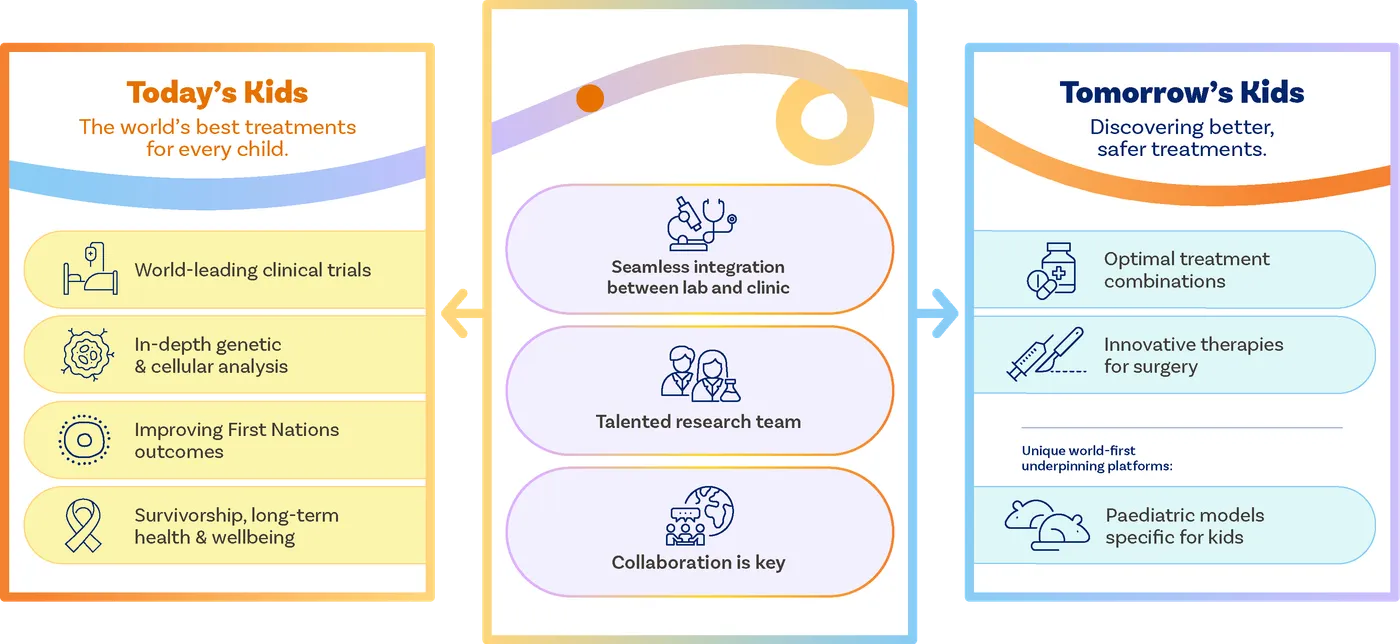
This integrated model enables us to deliver impact in two key areas.
Today’s Kids
Improving outcomes through personalised treatment, clinical trials and evidence driven care.
Tomorrow’s Kids
Creating breakthrough solutions for the future through transformational discovery research and developing new treatment approaches.
By working as one unified system, we can deliver safer, smarter and more effective treatments now, while building the innovations that will shape the future of childhood cancer care.
Enablers
The Centre's work across Today's Kids and Tomorrow's Kids is supported by three key enablers that will help our vision come to life.
Integration
By working hand-in-hand across clinical and laboratory settings, we can identify vulnerabilities in paediatric cancers. Our aim is to develop therapies that target cancer cells more precisely, while reducing the harsh side effects that can impact children’s immediate wellbeing and long-term health. This integrated approach ensures discoveries made in the lab can be translated more quickly into meaningful outcomes for children.
People
Our strength lies in our people. We bring together outstanding and internationally recognised clinical and laboratory teams with a wide range of skills and expertise across paediatric cancer care and discovery science. To deliver the best possible outcomes for children today and in the future, we are committed to building capacity by expanding our team, attracting leading talent to Western Australia, and supporting the development of the next generation of paediatric cancer researchers.
Collaboration
We believe the greatest breakthroughs happen through collaboration. The Centre works closely with an extensive network of scientific, clinical and allied health partners locally, nationally and internationally to accelerate progress in paediatric cancer research and care.
Community involvement is also central to our work. We partner with established research community reference groups and an oncology parent consumer group to ensure the perspectives of families help shape our research priorities and approach.
Underpinning platform: Child-specific treatments
Children's cancers are different from adult cancers, and they deserve treatments designed specifically for them.
Researchers in our Centre have developed world-first paediatric research models that are tailored to children and used to design targeted therapies for kids that are more effective and cause fewer long-term side effects. Unlike traditional discovery approaches that rely on adult models, our paediatric mouse models are specifically developed to reflect the unique biology of childhood cancers. This enables researchers to test new therapies in systems that more accurately predict how treatments will work in children, helping to close the long-standing difference between adult and paediatric treatment options.
These models are best used in developing and testing immunotherapies because it truly reflects the developing immune system of children.
Our unique paediatric models accelerate the development of treatments tailored to children and position the Centre as a global leader in paediatric cancer research. We work collaboratively with international partners where we share our expertise and support the development of similar paediatric-focused research models worldwide.
These platforms power both of our research pillars: supporting kids who need treatment today and transforming outcomes for kids in the future.