
About us
By uniting world‑class research with leading clinical care we are bridging the gap between discovery and delivery.
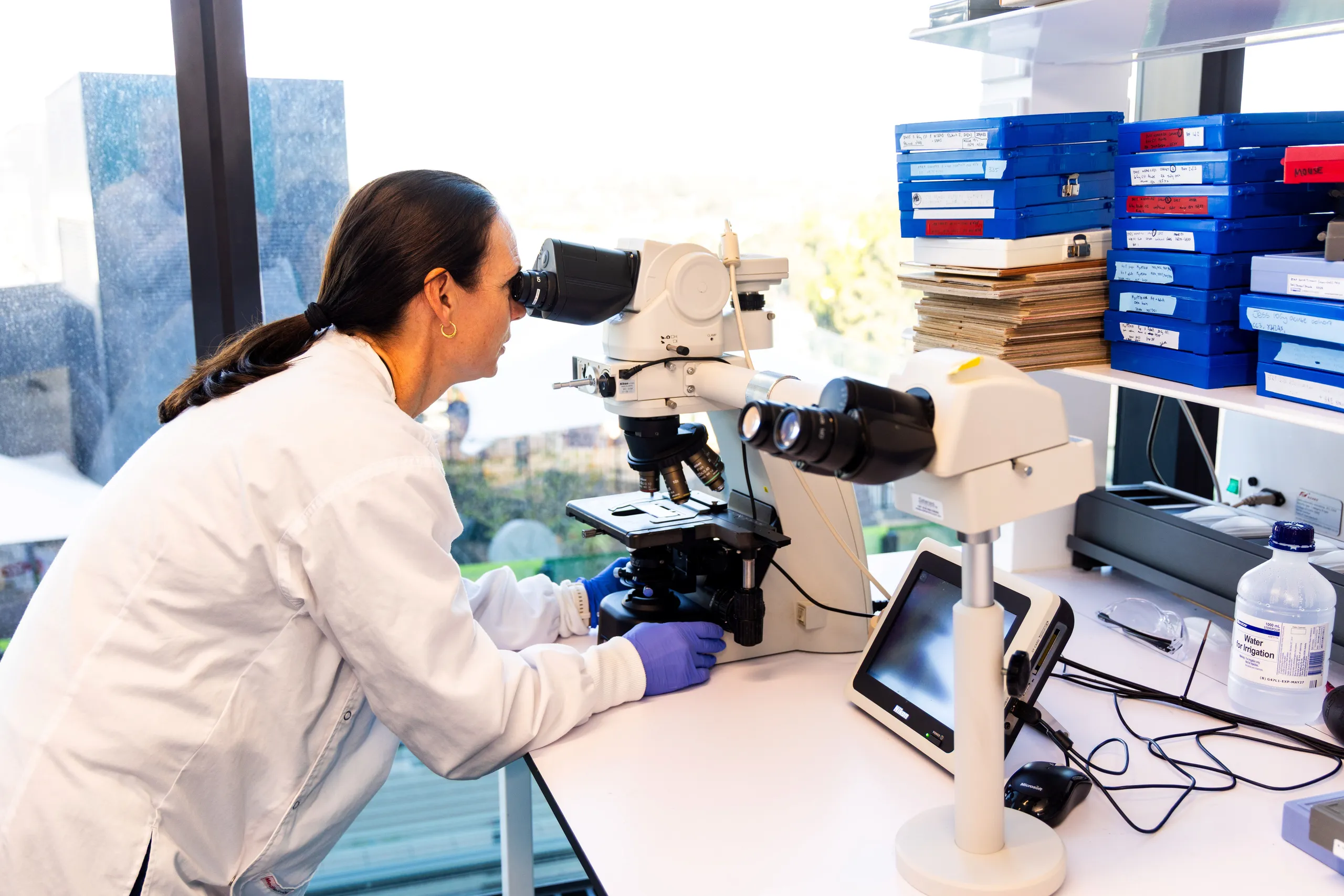
A new best-practice way to study radiotherapy in childhood brain cancer has been developed by researchers from the Brain Tumour Research team at The Kids Research Institute Australia (The Kids), part of the WA Comprehensive Kids Cancer Centre.
The team’s work aims to create a stronger foundation for testing future treatments, including improving outcomes while reducing the amount of radiation children need, thereby minimising treatment-related side effects.
Published in Advances in Radiation Oncology, the research established a way of delivering radiotherapy in laboratory mouse models that closely mirrored how children receive treatment in the clinic. This provided researchers with a more accurate platform to evaluate potential new therapies before they progress to clinical trials.
With this new platform established, researchers can now investigate treatments designed to work alongside radiotherapy to determine which combinations are most effective against childhood brain tumours.
Paper co-first authors, Dr Jess Buck and Dr Meegan Howlett, said the publication represented years of work to ensure the team’s laboratory mouse models accurately reflected the challenges faced by children with brain cancer.
"The better we can model these cancers, the better positioned we are to discover treatments that are more effective and kinder for children,” Dr Buck said.
Radiotherapy is a vital part of treatment for many children with brain tumours. While it plays an important role in improving survival, researchers continually work to develop therapies that can work alongside radiotherapy to make treatments even more effective and kinder for children.
Before researchers can safely test new medicines in children, they first need reliable laboratory mouse models that accurately reproduce how treatments behave in patients.
The research showed that different approaches to delivering radiotherapy produced very different results. By identifying a method that closely mirrored clinical practice, they created a reliable benchmark that can now be used to evaluate future therapies with much greater confidence.
“Rather than relying on a one-size-fits-all approach, our work demonstrates the importance of optimising radiotherapy for different tumour types, creating more clinically relevant models for childhood brain cancer research,” Dr Howlett said.
The study highlighted the power of multidisciplinary collaboration, bringing together expertise from laboratory researchers, clinicians, radiation oncologists and medical physicists to develop research that has the potential to improve care for children with brain cancer.
The Kids and The University of Western Australia deliver the WA Comprehensive Kids Cancer Centre’s laboratory research through their cancer research teams, working alongside the Perth Children’s Hospital clinical team.
This work was made possible through generous support from BHP, Cancer Council WA, Pirate Ship Foundation, The Kids Cancer Project, Forrest Research Foundation, NHMRC, Stan Perron Charitable Foundation, and the Western Australian Future Health Research and Innovation Fund. It was also supported by a Richard Walter Gibbon Medical Research Scholarship and an Australian Government Research Training Program Scholarship at the University of Western Australia.
Read the full article hereBy uniting world‑class research with leading clinical care we are bridging the gap between discovery and delivery.
We aim to deliver safer, smarter and more effective care now, while building the innovations that will shape the future of childhood cancer treatment.
Comprehensive Cancer Centres are widely recognised as the gold standard in cancer research and care.